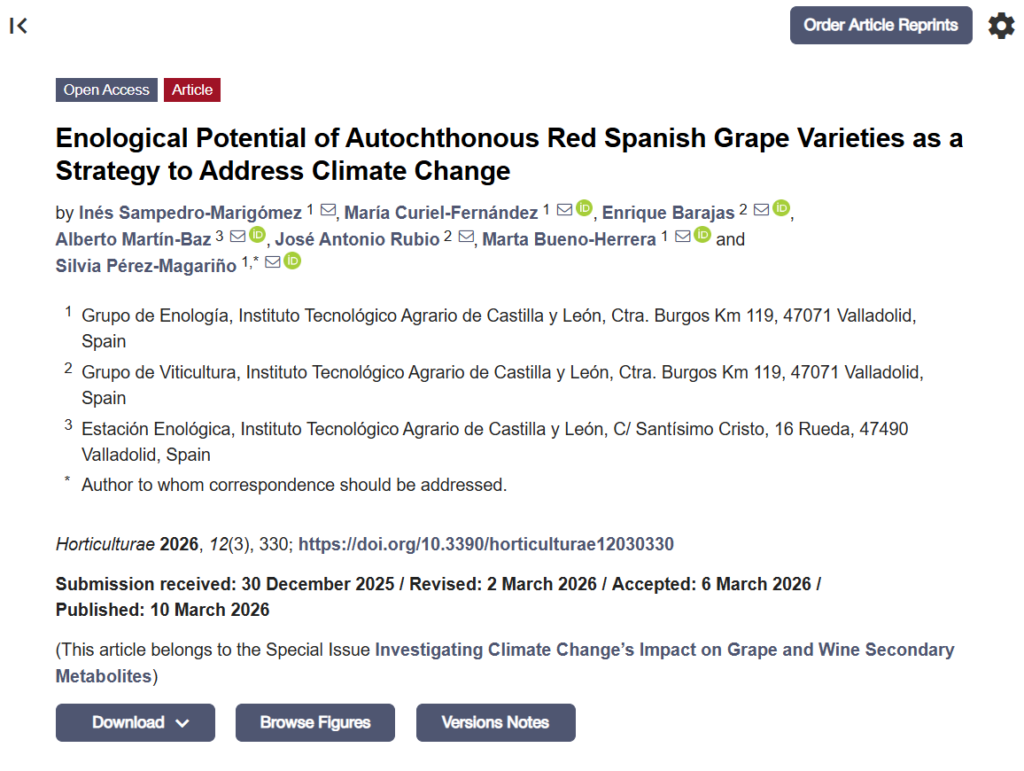
Tell us what spring was like, and let’s guess what the harvest will be like
Castilla y León has experienced the warmest spring on record since 1900, according to the Spanish State Meteorological Agency. A temperature anomaly of 2°C above what is usually expected at this time of year was recorded, with particularly intense heat episodes: on many days, temperatures exceeded 25–30°C across all the provinces of Castilla y León. The heat was accompanied by a worrying rainfall deficit of approximately 17%, with March and May standing out as particularly dry months. The northwest and some areas in the south of the region have been classified as dry or very dry, precisely the area where the Minorsens project is being implemented. In the northern region of Portugal, the situation has been very similar, with a spring that was clearly warmer and drier than usual, with less than half the normal rainfall recorded in several areas.
The heat has led to very early budburst and flowering, which suggests that the entire viticultural calendar will be brought forward, including the harvest. This June, we are already experiencing heatwaves, and it is highly likely that they will continue throughout the rest of the summer (as has happened in recent years). This places stress on the plants and may even result in smaller and lighter grape clusters than usual.
So, what can we expect from the 2026 harvest?
The 2026 season is expected to help identify which varieties are more resilient—that is, those that, even with an earlier harvest and under conditions of high temperatures and limited rainfall, are able to produce grapes with balanced ripeness and wines with a lower risk of excessive alcohol levels and loss of acidity.
This would send a very powerful message: the recovery of minority grape varieties is not merely a strategy for preserving viticultural heritage; it can also become a tool for adapting viticulture in Castilla y León to climate change.
Finally, another important aspect worth highlighting is the significant decrease in the incidence of fungal diseases, such as powdery mildew and downy mildew. This has a positive impact on vineyard health and, consequently, on the harvests that await us in the coming years.
Minorsens in the Scientific Community
Minorsens was born out of a strong commitment to research and a multidisciplinary approach that brings together fields of knowledge such as sensor technology, viticulture, oenology, and analytical sciences, among others, always with the aim of developing innovative solutions for the wine sector.
The Minorsens team is publishing many of its findings in order to share them with the scientific community and contribute to expanding global knowledge in some of the aforementioned fields. Recently, the article “Enological Potential of Autochthonous Red Spanish Grape Varieties as a Strategy to Address Climate Change” was published in the renowned journal Horticulturae (https://doi.org/10.3390/horticulturae12030330).). The study evaluates different agronomic variables in the field over four years across nine Minorsens varieties and examines their oenological potential in two subsequent vintages. The results support the usefulness of minority grape varieties in strengthening the resilience of the wine sector in the face of an increasingly changing climate.