2025: A key year for Minorsens
During the past year, we have identified six new native minority grape varieties from Castilla y León. We are currently working with 21 varieties from Castilla y León (including 3 synonyms) and 8 minority varieties from the North of Portugal, meaning a total of 29 minority varieties rescued, studied and promoted. We have made significant progress in calibrating the electronic nose and tongue, establishing mathematical correlations between data obtained through traditional chemical analysis and the new technologies we are developing. We have a large amount of data to train the systems, so the work carried out in recent months has been (and continues to be) really intensive.
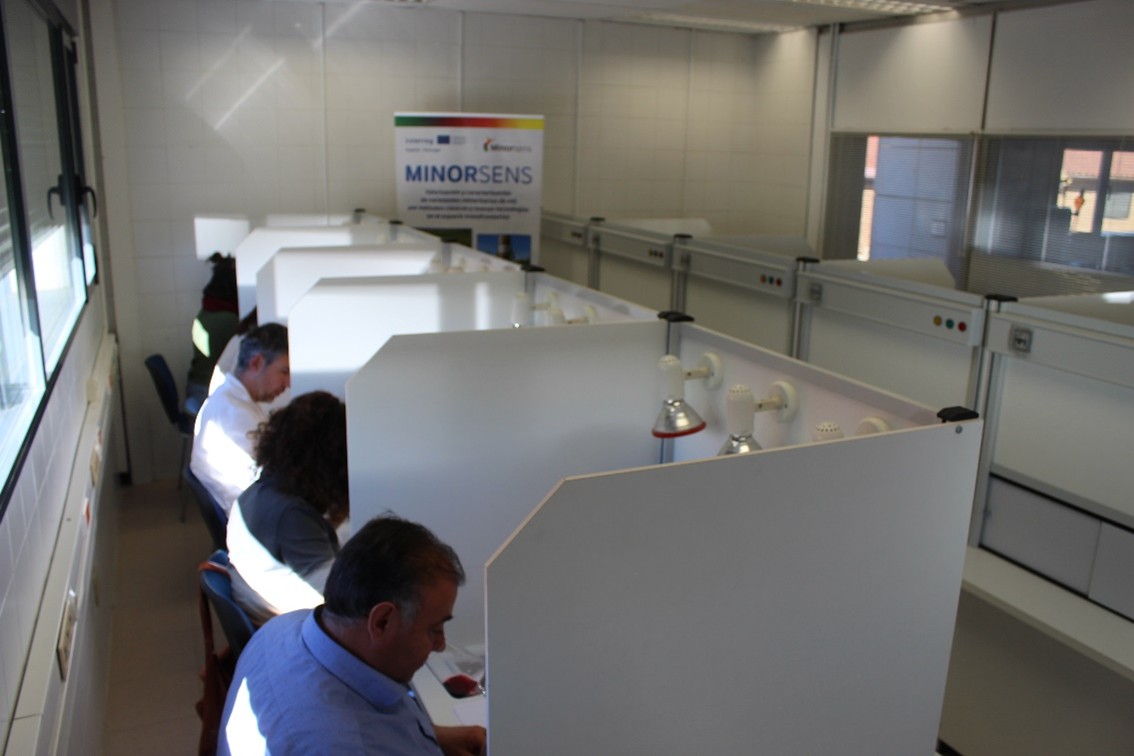
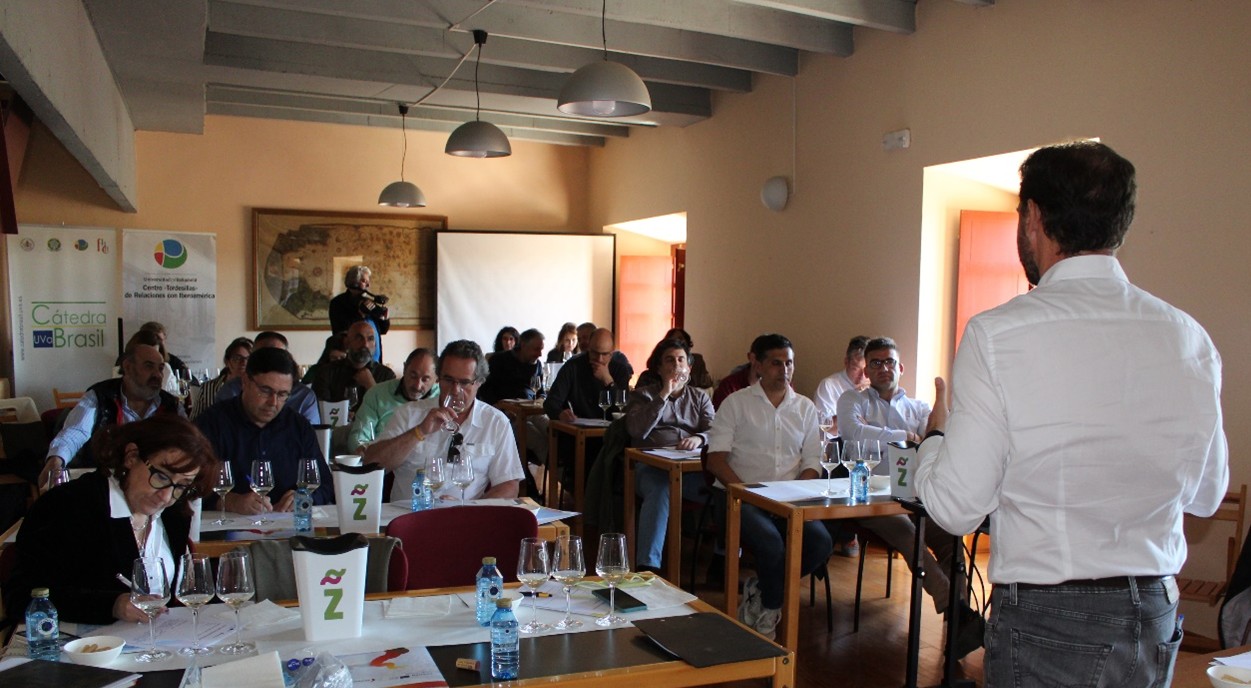
A key moment was, undoubtedly, the Minorsens informative event held in April (at the project’s midpoint), aimed at winemakers and grape growers in the cross-border cooperation area. During this event, we were able to realize the great interest that minority varieties generate and how necessary innovation and research are in this sector.
2026 begins full of challenges, looking forward to achieve promising results. The 2025 wines are already bottled and awaiting analysis, being the third year of data collection. We are currently working on publishing several scientific articles that will contribute to expanding knowledge in the world of viticulture and sensor technology, with real-world applications in the wine sector.
Getting to know Minorsens wines: Tasting notes for some of the rescued varieties
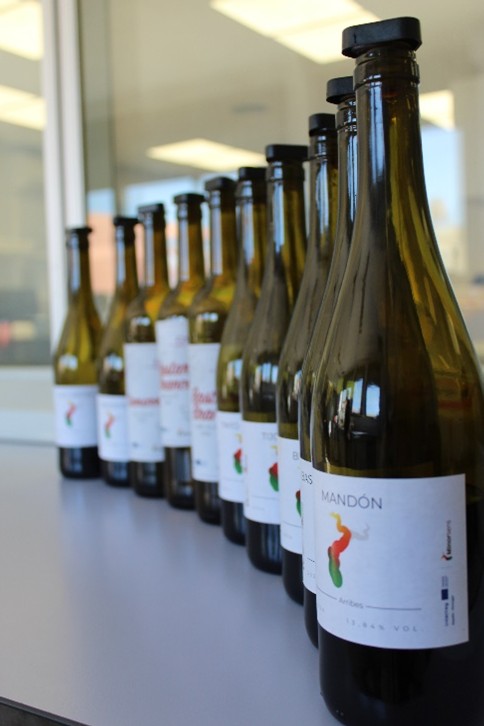
During the last months, we learnt about the organoleptic characteristics of the studied varieties and we would like to share with you some of the most remarkable ones:
Puesta en Cruz (2024 vintage): This is a minor white grape variety from the Arribes del Duero region (Castilla y León), which boasts a very distinct climate and soil, as well as a unique cultivation method characterized by small vineyard plots, typically located on terraced slopes. This wine shows aromas of herbs and fruit, expressing itself differently from other white wines. It combines breadth on the palate with freshness and a very persistent finish. This variety has considerable aging potential due to its high acidity and low pH.
Boal (2024 vintage): A white variety from Northern Portugal that received a good rating during the tastings conducted as part of the project. Its aroma is characterized by white fruit and citrus notes. On the palate, it stands out for its body and acidity, with a persistent flavour.
Cenicienta (2024 vintage): A red grape variety from the Rueda Designation of Origin (Castilla y León) that has been rescued from just two vines. It has a medium-high aromatic intensity, with hints of black fruit and black pepper, conveying freshness. On the palate, it is very persistent with ripe tannins. This variety has great winemaking potential.